August 31, 2026
Shingle Roofing in the Flathead Valley: What Actually Holds Up
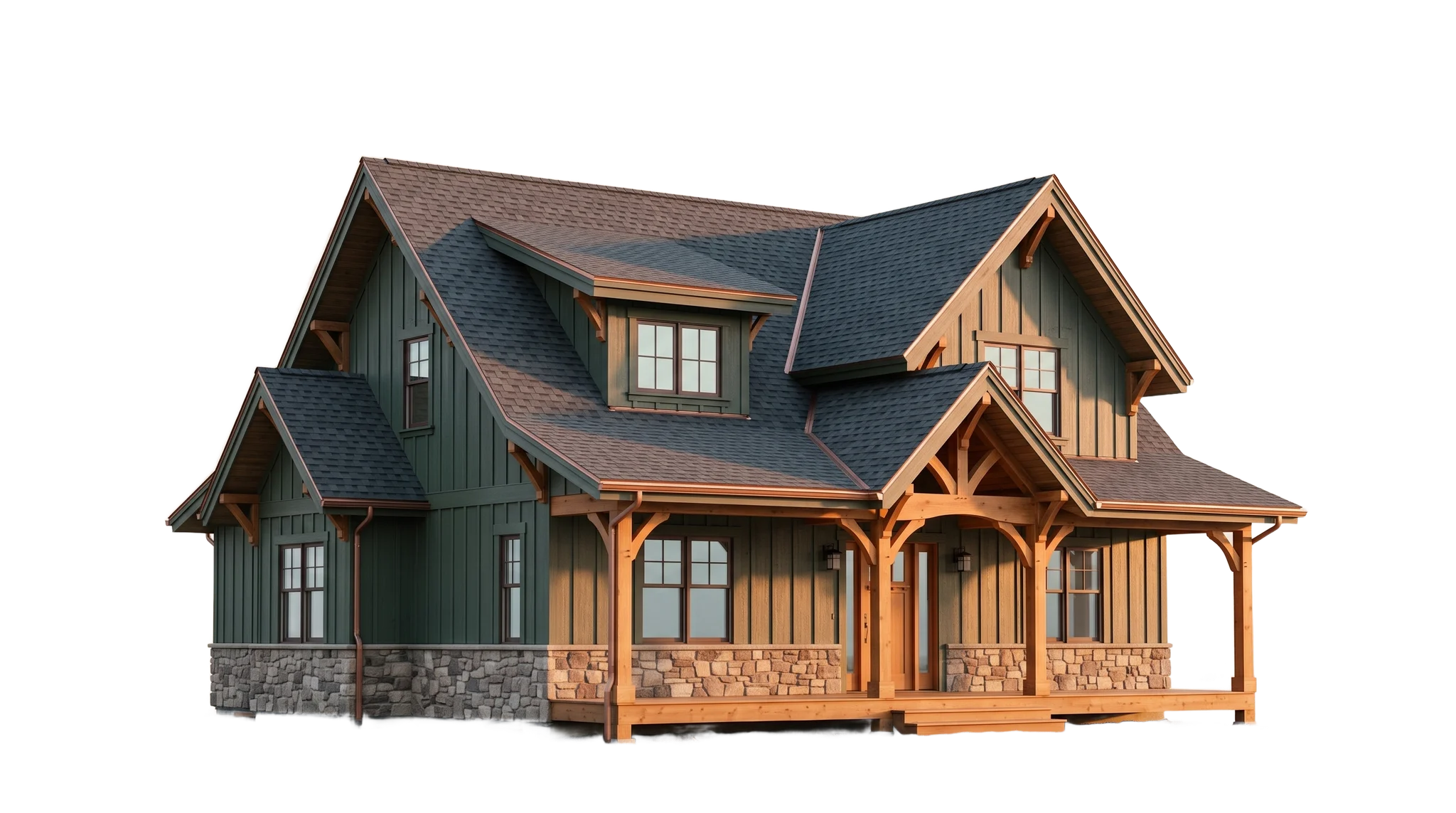
The short answer: Asphalt shingles remain the best value roof for most Flathead Valley homes, but only the right asphalt installed the right way. Polymer-modified shingles stay flexible through our freeze-thaw winters where standard shingles turn brittle and crack, and the install details underneath, ice barrier, ventilation, and proper flashing, decide whether the roof reaches its potential lifespan or fails a decade early.
Shingles cover most of the roofs in the valley, and they’ll cover most of the next generation of them too. The differences between a shingle roof that quietly does its job for decades and one that sheds tabs into the yard every March come down to two choices: the chemistry of the shingle and the discipline of the install. Here’s both, explained the way we’d explain them across a tailgate.
How long do asphalt shingles last in Montana?
Industry ranges put architectural asphalt shingles at 20 to 30 years, and in the Flathead Valley the material you pick decides which end of that range you land on. Bargain builder-grade shingles age fast here because our winters cross the freezing line constantly, and standard oxidized asphalt embrittles under that cycling. Polymer-modified shingles, the rubberized kind we install, are built to hold their flexibility and reach the upper end of the range. Install quality then decides whether the shingle gets the chance.
What polymer-modified asphalt is and why it exists
A traditional shingle is a fiberglass mat coated in oxidized asphalt and surfaced with mineral granules. Oxidized asphalt starts life workable and hardens over the years as UV light and heat drive off its lighter oils. Hard asphalt holds granules poorly and cracks under movement. Every old, curled, bald shingle you’ve seen is that chemistry playing out.
Polymer-modified asphalt (you’ll also hear “rubberized” or “SBS-modified”) answers that problem directly. Manufacturers blend the asphalt with rubber polymers, the styrene-butadiene family long used in commercial roofing membranes, and in some formulas plastic polymers too. The blend behaves like what it’s made of: it flexes, absorbs impact, and holds its granules instead of shedding them.
The brand we install most, as a Malarkey certified installer, publishes numbers on this. Malarkey’s NEX polymer-modified shingles test at up to 25% greater tear strength and up to 65% greater granule adhesion than the ASTM D3462 industry standard, and their Vista, Legacy, and Windsor lines all carry the Class 4 rating under UL 2218 impact testing, the highest the test awards. That impact rating matters in a state where Farmers Insurance claim data has ranked Montana first in the nation for the share of springtime auto claims caused by hail. The Flathead is gentler than the plains east of the divide, but valley hail is a matter of when, not if.
Polymer-modified shingles cost more than builder-grade. In a mild climate, that premium is a judgment call. In this valley, it’s the whole ballgame, and here’s why.
What valley freeze-thaw does to bargain shingles
The Flathead’s winter isn’t a deep freeze. It’s a metronome. Kalispell sits near 3,000 feet, averages roughly 56 inches of snow a year, and spends much of the winter with daytime highs near or above freezing and nights below it. Typical winter days top out around the freezing mark, which means the roof surface thaws and refreezes over and over, week after week, from November into April.
Every one of those cycles works on a shingle. Water from melting snowpack finds every gap and pore, freezes at night, and expands about nine percent as it does. The shingle itself expands and contracts with the temperature swings, flexing at every nail line and sealant bond. A flexible shingle shrugs this off. A brittle one accumulates micro-cracks, and micro-cracks grow.
On bargain shingles, the valley’s cycling produces a familiar failure sequence: granules wash into the gutters in years five through ten, exposed asphalt embrittles faster in the UV, corners curl, tabs crack at the flex points, and wind starts removing pieces. We tear off roofs like this all over the valley that never got close to the age printed on the wrapper. The homeowner didn’t do anything wrong. The material was engineered for a milder average, and the Flathead doesn’t do mild averages.
That’s the case for polymer-modified in one sentence: our climate attacks asphalt’s brittleness specifically, and rubberized asphalt is the version of the product engineered against exactly that attack.
What a proper shingle install includes here
The shingle is the visible half of the roof. The install is the half that decides whether the visible half survives. A proper Flathead Valley shingle roof includes:
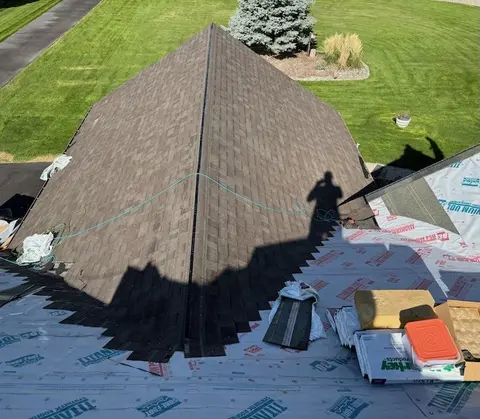
Full tear-off and deck inspection. We don’t lay over old roofs. Tear-off exposes the decking, and in this valley there’s often a soft spot or two of rot to fix, usually below a long-standing ice dam line or a failed flashing.
Ice barrier at the eaves, to code, everywhere. The residential code requires a self-adhering, polymer-modified ice barrier membrane from the eave edge to at least 24 inches inside the exterior wall line in areas with a history of ice damming, and adds coverage on steep pitches. Kalispell and Whitefish enforce this through their city building departments. Unincorporated Flathead County has no county building department, by voter choice, so rural installs get no inspection at all. That gap is where corner-cutting hides. We build to the code spec on every roof regardless of who is or isn’t checking, and we run ice barrier in the valleys and around penetrations too, because that’s where valley winters push water.
Synthetic underlayment on the field. The secondary water barrier across the rest of the deck.
Drip edge, starter course, and correct nailing. Boring, invisible, and responsible for most wind performance. Shingle wind ratings assume the nailing pattern on the wrapper; a crew that misses the nail line is quietly voiding the roof’s rating one shingle at a time.
Flashing done in metal, not caulk. Chimneys, sidewalls, and pipe penetrations get formed metal flashing. Sealant is a gasket, not a structure, and it has a short life in freeze-thaw country.
Ventilation as part of the roof, not an accessory. Balanced soffit intake and ridge exhaust keep the deck cold in winter, which is the real ice dam prevention, and cool in summer, which slows the asphalt’s aging. We correct blocked soffits and missing ridge vents during the roof replacement rather than shingling over the problem.
Every job starts with a drone survey, so the estimate is built from photos of your actual roof rather than a squint from the driveway. It’s how owner Ben Wuollet set the company up to quote, and it means you see what we see. The full system details live on our residential shingle roofing page, and if you’re comparing contractors in town, our Kalispell roofing page covers how we work there. We’re licensed with the state of Montana (license 400855IC) and run our crews out of our shop in Kila.
Frequently asked questions
Are architectural shingles worth it over 3-tab in the Flathead Valley?
Yes, without much debate. Architectural (laminate) shingles are thicker, heavier, and rated for higher wind, and the polymer-modified versions handle freeze-thaw far better than any 3-tab. The valley’s cycling winters and real snow loads sit outside what 3-tab shingles were designed around. We no longer recommend 3-tab for full roofs here.
What is the best shingle brand for Montana?
We install Malarkey as our primary line because its NEX polymer-modified asphalt directly targets the brittleness that kills shingles in freeze-thaw climates, and its main lines carry Class 4 impact ratings for hail. Owens Corning makes strong products too, and we hold their Preferred Contractor status. Brand matters less than asphalt chemistry and install quality.
Can shingles be installed in winter here?
They can, with precautions. Self-seal strips need warmth to bond, so winter installs get hand-sealing and careful cold-weather handling of the shingles, which turn stiff in the cold. When the schedule allows a choice, we’d rather install your roof between late spring and October. When a failed roof can’t wait, we don’t make it wait.
Do Class 4 shingles lower insurance premiums in Montana?
Many insurers offer discounts for UL 2218 Class 4 impact-rated roofs because they generate fewer hail claims, and Montana’s hail record makes those discounts meaningful. Programs vary by carrier, so ask your agent before the install and keep your product documentation. We provide the manufacturer paperwork for every roof we install.
Ready to talk about what’s actually on your roof? Reach out and we’ll start with the drone survey.