Shingle Roofing in the Flathead Valley
Sisu Roofing installs shingle roofing in Kalispell, MT and across the Flathead Valley, and it is the system we put on more homes than any other. Asphalt shingles earn that spot honestly: they handle complex rooflines, cost less per square than metal, and the modern polymer-modified versions we install are engineered for exactly the hail and cold this valley delivers. Every shingle estimate starts with a drone flight over your roof, photos included.
Not all asphalt shingles survive Montana
The gap between a builder-grade three-tab and a polymer-modified architectural shingle shows up fast here. Standard asphalt gets brittle in deep cold, and brittle shingles crack under foot traffic, hail, and freeze-thaw movement. That is why we install Malarkey as our primary line: their NEX polymer technology modifies the asphalt itself, keeping the mat flexible in cold and rated for hail impact. It is the same idea as the difference between a summer tire and a winter tire. Same category of product, built for different conditions, and this valley is firmly the winter-tire case.
What a certified install gets you
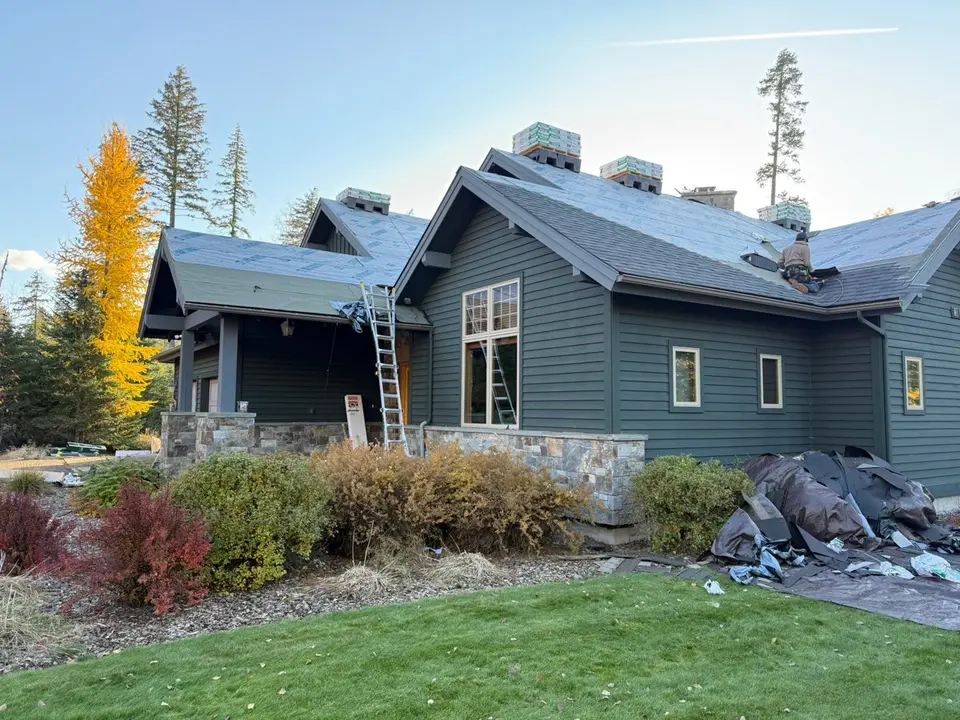
We are a Malarkey Certified Installer and an Owens Corning Preferred Contractor, and certification is about more than a logo. It means our crew installs to the manufacturer's spec: correct nailing pattern and placement, correct exposure, manufacturer-matched starter and ridge components, and ventilation that meets the system requirements. Most premature shingle failures we get called to repair are installation failures, not product failures. High nails, skipped starter strips, and choked ventilation kill roofs that the shingles themselves could have carried for decades. Malarkey's editors featured our Bigfork Vista install in their Contractor Corner, which says more than we could about the standard our crew works to.
Choosing a shingle line and color
Within the Malarkey and Owens Corning lines there is a real range: architectural profiles that fit most homes and budgets, heavier designer profiles for a deeper shadow line, and impact-rated options worth asking your insurance agent about. Color matters more than people expect in the Flathead, where the roof is often the largest surface you see against a backdrop of timber and mountains. We bring physical samples to the estimate, because a shingle in your hand under valley light beats a swatch on a screen every time.
- Architectural shingles: the standard for most Flathead homes
- Designer profiles: heavier weight, deeper shadow lines
- Impact-rated options: worth a conversation with your insurer
- Full range of colors, sampled in person at the estimate
The system under the shingles
Shingles are the wear surface. The roof is the whole stack, and we build the stack for this climate: ice and water shield at eaves and in valleys where ice dams push meltwater uphill, synthetic underlayment across the deck, metal drip edge, and balanced ridge and intake ventilation. Ventilation deserves the emphasis. A choked attic bakes shingles from below in July and feeds the ice dams that tear up eaves in January. Getting the airflow right is half of what makes a shingle roof last here.
What does a shingle roof cost in the Flathead Valley
We price every shingle roof from the drone survey and quote the full system, never shingles-per-square alone. These factors drive the number.
- Roof area and how cut-up the roofline is: hips, valleys, and dormers add labor
- Pitch: steeper roofs need more staging and slower, safer work
- Shingle line: architectural, designer, or impact-rated
- Tear-off scope and the condition of the decking underneath
- Ventilation corrections, which many older Flathead homes need
- Flashing details at chimneys, walls, and skylights
Malarkey polymer-modified shingles rated for hail and cold
Certified installation to manufacturer spec, not shortcuts
Ice and water shield placed where valley ice dams actually form
Ventilation balanced for Flathead winters and summers
Physical color samples brought to every estimate
Drone photo documentation before and after the install
How it goes
- 01
Drone survey
We fly the roof, measure it precisely, and share the photos so you see the starting condition.
- 02
Shingle selection
We review lines and colors with samples in hand and quote the complete system in writing.
- 03
Install
Tear-off if needed, deck check, underlayment and ice shield, then shingles nailed to manufacturer spec.
- 04
Cleanup and final photos
Magnetic nail sweep, full site cleanup, and a finished-roof drone flight delivered to you.