Flat & Low-Slope Roofing in the Flathead Valley
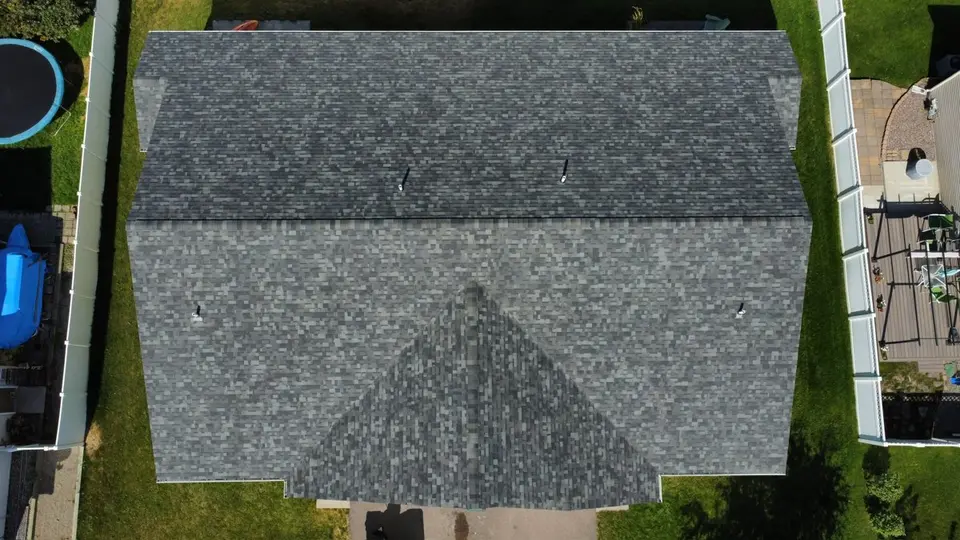
Sisu Roofing installs and repairs flat roofing in Kalispell, MT and across the Flathead Valley, covering the full membrane range: TPO, EPDM rubber, and modified bitumen. Flat and low-slope roofs carry the hardest duty in this climate, holding standing snow for months where a pitched roof sheds it, so membrane choice and drainage design matter more here than almost anywhere. We handle commercial flat roofing in Kalispell and the low-slope sections on homes, additions, and shops, and every estimate begins with a drone flight over the roof, photos shared.
TPO, EPDM, or modified bitumen: which membrane fits
The right membrane depends on the building, not on what a contractor happens to stock. TPO is a heat-welded single-ply whose seams fuse into one continuous sheet, a real advantage under freeze-thaw, and its white surface helps summer cooling on conditioned commercial space. EPDM, the black rubber membrane, is the proven workhorse: flexible in deep cold, economical, and straightforward to repair, which suits garages, additions, and buildings where simple and serviceable wins. Modified bitumen brings multi-layer redundancy and puncture resistance for roofs that see foot traffic or equipment. We install all three, so our recommendation follows the building instead of the truck inventory.
- TPO: welded seams, reflective surface, strong fit for conditioned commercial space
- EPDM rubber: cold-flexible, economical, easily repaired
- Modified bitumen: layered redundancy where roofs get walked on
Flat roofs under a Flathead snow load
A pitched roof sheds; a flat roof carries. Snow that lands on a Kalispell flat roof in November may still be there in March, cycling through melt and refreeze the whole time, and every low spot becomes a frozen pond working at the seams. This is why flat roof design here is mostly drainage design: tapered insulation to kill ponding areas, drains and scuppers sized and placed for melt surges, and overflow paths for the warm chinook day when everything releases at once. Membrane choice matters, but a good membrane over bad drainage still fails. We design for the water first.
Commercial flat roof replacement and repair
Flat roofs cover a large share of Kalispell's commercial space, and owners usually face a three-way choice: repair, recover, or replace. Localized damage on a roof with dry insulation gets repaired. A tired but sound roof can often take a recover, a new membrane over the existing assembly, avoiding tear-off cost and keeping the business open. Saturated insulation means replacement, because new membrane over wet insulation seals the problem in. The honest answer lives under the surface, so we combine the drone survey with core checks before recommending anything. You get the evidence either way.
Low-slope roofing on homes
Plenty of Flathead homes carry a low-slope section: a mid-century flat over the living room, a shed-roof addition, a porch, a garage. These fail more often than the main roof because they were often built with the wrong material in the first place; shingles on a nearly flat pitch leak by design. We replace those sections with proper membrane, tied correctly into the pitched roof above so the transition, the most leak-prone line on the house, is welded and layered rather than caulked. If your addition stains the ceiling every spring thaw, this is almost certainly why.
Membranes have limits, and we name them
Membrane roofs are the right answer for the buildings that need them, and the wrong answer for some that ask. The honest cases are listed below, and when your project is one of them we will say so at the estimate and point you to the better system.
What does flat roofing cost in the Flathead Valley
Flat roof pricing turns on what is under the membrane as much as the membrane itself, so we quote after the drone survey and any needed core checks. The main factors are these.
- Roof area and how many penetrations, curbs, and terminations it carries
- Membrane system: TPO, EPDM, or modified bitumen
- Whether the job is a repair, a recover, or a full tear-off replacement
- Condition of the insulation and deck underneath
- Drainage corrections: tapered insulation, added drains or scuppers
- Access and staging, especially on occupied commercial buildings
When flat isn't the right call
- Sections with enough pitch for shingles or metal: sloped systems shed snow instead of storing it, and cost less over time
- New additions where a small design change would buy real slope: we will suggest the change before quoting membrane
- Roofs whose real problem is structural sag: new membrane over a deflecting deck just relocates the pond
- Owners who want zero upkeep: flat roofs in snow country need drains cleared and seams checked, and we say so up front
- Recover requests over wet insulation: we decline these, because sealing moisture in guarantees the next failure
TPO, EPDM, and modified bitumen: the membrane follows the building
Drainage-first design for standing snow and spring melt surges
Repair, recover, and replace options quoted with evidence
Membrane-to-shingle transitions welded and layered, not caulked
Commercial and residential low-slope under one licensed contractor (400855IC)
Drone documentation of every roof, before and after
How it goes
- 01
Drone survey
Aerial photos map ponding, membrane condition, and drainage across the whole roof before we quote.
- 02
Moisture and core evaluation
Where the flight flags trouble, we verify what is under the membrane, because wet insulation changes the answer.
- 03
Membrane install
Repair, recover, or full replacement with tapered drainage corrections, sequenced to keep buildings open.
- 04
Seam check and documentation
Every seam and termination is inspected, then the finished roof is flown and the photo set delivered.