Metal Roofing in the Flathead Valley
Sisu Roofing installs metal roofing in Kalispell, MT and across the Flathead Valley, and demand for it here keeps growing for good reason: metal sheds snow, shrugs off wind, and outlasts most other systems in mountain climates. It is also more expensive than shingles and wrong for some houses, and we will tell you which case yours is. Every metal roofing estimate starts with a drone flight over your roof, with the photos shared so the conversation starts from facts.
Standing seam vs. exposed fastener
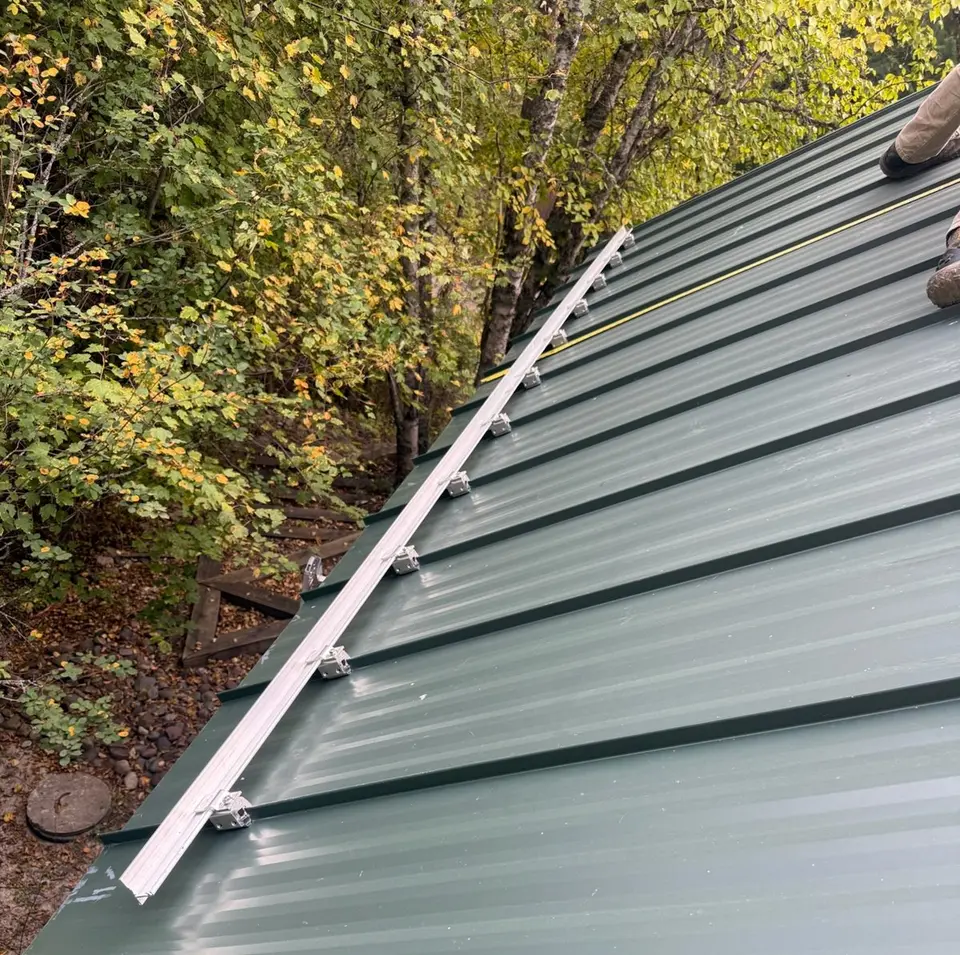
Residential metal comes in two main families and the difference matters. Standing seam panels lock together at raised ribs and fasten with hidden clips, so no screw heads face the weather and the panels can expand and contract through our temperature swings without working holes loose. Exposed-fastener panels screw down through the face with gasketed screws: cheaper and faster to install, and a solid choice for shops, garages, and cabins, but those gaskets are a maintenance item over the decades. For a primary home you plan to keep, standing seam is usually the answer we recommend. For outbuildings, exposed fastener often wins on value.
- Standing seam: hidden fasteners, built-in expansion movement, premium look
- Exposed fastener: lower cost, faster install, gaskets need eventual attention
- Both available in snow-country colors and finishes
What metal does well in snow country
The Flathead is close to a best case for metal roofing. Snow releases from a smooth steel surface instead of piling into the loads that stress shingle roofs and feed ice dams. The panel surface is unbothered by the freeze-thaw cycling that ages asphalt. Valley winds that lift and crease shingles find nothing to grab on a locked seam. And when summer hail comes through, steel takes cosmetic dings where asphalt takes functional damage. None of that makes metal automatic, but it explains why so many Flathead homeowners ask for it, and why we build a real metal practice instead of treating it as a sideline.
Snow retention, valleys, and the details that matter
Metal's snow-shedding is a feature that has to be engineered rather than simply enjoyed. A roof that dumps its snow load in one release can bury a walkway, tear off a gutter, or land on a vehicle, so we design snow retention (bars or cleats) above doors, walks, and driveways. Valleys need wider, heavier detailing than shingle valleys because sliding snow scours them. Penetrations need boots designed to move with the panel. These details are where inexperienced metal installs fail, and they are exactly where our crew spends its care. The drone photos of the finished details come to you either way.
We talk people out of metal, too
We install a lot of metal, and we still talk a fair number of people out of it. The honest cases are below. When one of them fits, we will say so at the estimate and quote you the system that actually serves the house, usually a polymer-modified shingle that handles this climate for less money.
What does a metal roof cost in the Flathead Valley
Metal pricing varies more than shingle pricing because the system choices are wider. We quote from the drone survey, and these are the levers.
- Panel system: standing seam costs more than exposed fastener
- Panel gauge and finish quality
- Roof complexity: hips, valleys, and dormers add trim and labor fast on metal
- Snow retention scope over doors, walks, and driveways
- Tear-off versus overlay, and deck condition underneath
- Chimney, skylight, and wall flashing fabrication
Who metal is wrong for
- Tight budgets where a polymer-modified shingle covers the same house for meaningfully less
- Very cut-up rooflines, where metal's trim and labor costs climb steeply and shingles handle the complexity better
- Homes being sold soon: sale prices rarely recover metal's premium over a fresh shingle roof
- Anyone expecting zero maintenance: exposed-fastener systems in particular need periodic checks
- Projects where matching an existing shingle section matters more than upgrading one slope
Standing seam and exposed-fastener systems, matched to the building
Snow retention engineered over doors, walks, and driveways
Panels and details rated for Flathead wind and temperature swings
Honest guidance when shingles are the smarter buy
Drone documentation of every seam and detail
Licensed Montana contractor (400855IC)
How it goes
- 01
Drone survey
We fly and measure the roof, and the photos come to you, so panel layout starts from real geometry.
- 02
System design
Panel profile, gauge, color, and snow retention plan, quoted in writing with the tradeoffs explained.
- 03
Install
Tear-off or deck prep, underlayment, then panels, trim, and flashing detailed for snow and movement.
- 04
Detail check and final flight
We verify every seam, boot, and snow bar, then fly the finished roof and send you the photo set.