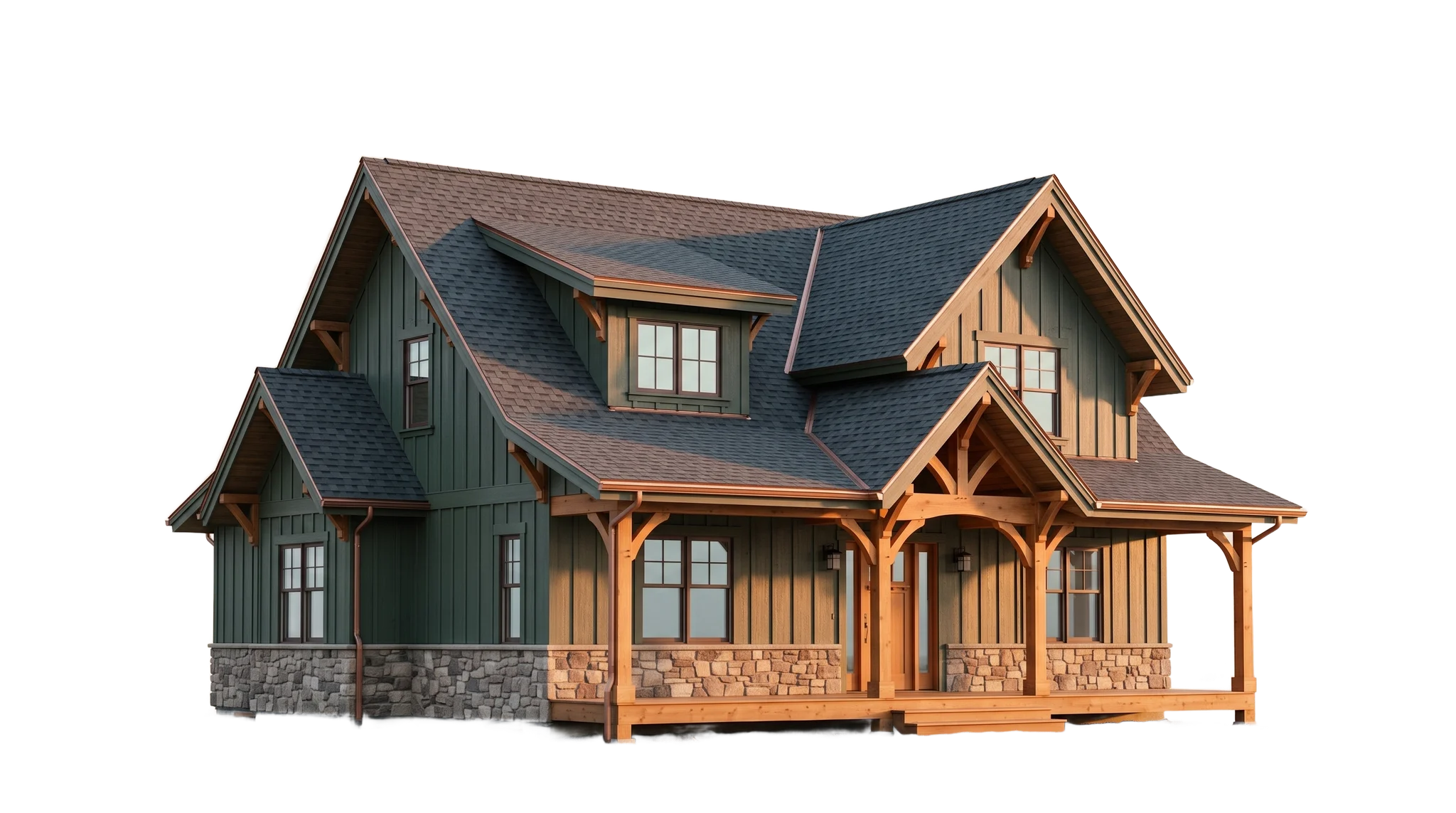
Metal Roofing in Kalispell, MT
Metal roofing in Kalispell gets designed around snow before anything else. Montana's building rules assign Kalispell a design ground snow load of 50 pounds per square foot, and what a metal roof does with that load, shed it or hold it, is the first decision we work through on every project. We install standing seam and exposed-fastener metal across the valley from our shop in Kila, about 15 miles out on US 2, and every estimate starts with a drone survey of the roof you have now.
Shed or hold: the decision that shapes the whole roof
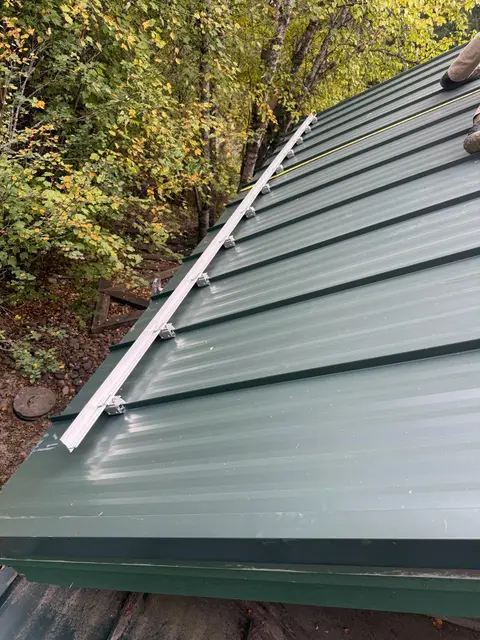
A smooth standing seam panel wants to release snow, and over an open yard that is exactly what you want. Over anything you walk past or park under, it is a hazard. A slab of settled snow off a steel roof arrives all at once and takes gutters, railings, and shrubs with it, so we map where the snow will land before we pick the system. Slopes over entries, decks, gas meters, and heat pumps get snow retention, either a rail system or clamp-on guards that grip the seams without putting a hole in the panel. Slopes over open ground get left slick so they can do their job. On a cut-up roofline that decision runs slope by slope.
- Slick slopes over open ground, so the roof sheds its own load
- Rail or clamp-on retention above entries, walkways, and decks
- Retention over gas meters, AC units, and heat pumps
- Gutter and valley detailing that survives sliding snow
Standing seam over the rooms you heat
Standing seam earns its price over living space. The fasteners are concealed under the seams, so there are no gasketed screw heads to loosen as the panels expand and contract through a Kalispell winter, and the continuous panels give melting snow very little to grab. That matters at the eaves, where heat escaping from the rooms below melts the underside of the snowpack and the water refreezes over the cold overhang. On shingle roofs that cycle builds ice dams; on standing seam over a properly detailed ice and water membrane, the water has a much harder time getting in. Exposed-fastener panels still make sense on shops, barns, and unheated outbuildings, but the screws are a maintenance item, and we say so up front.
Metal on Kalispell's actual housing stock
Kalispell's houses split roughly by era, and the metal conversation is different on each side of that line. The East Side and Courthouse historic districts hold Craftsman, Foursquare, and Victorian homes from the early 1900s, with steep pitches, dormers, and rooflines that break into many small planes. Metal works on these houses, but it is detail work: short panel runs, lots of flashing, and profile choices that sit right on an old house. The newer subdivisions on the city's north end, like Silverbrook Estates along US 93 near the Church Drive interchange, run to simpler, broader roof planes where long standing seam runs go down clean. The drone survey tells us which kind of job yours is.
Snow load, code, and the honest word on hail
Montana law sets a floor of 30 pounds per square foot for design roof snow load no matter what reductions the calculations allow, and Kalispell's 50 psf ground snow load runs well above that. Steel panels carry the loading well, and a shedding roof spends less of the winter loaded at all. Hail is the honest caveat. The storm that crossed the valley in July 2022 dropped hail up to two inches, and hail that size can dent metal panels. The dents are almost always cosmetic rather than functional, but if a showroom-flat roof matters to you, heavier gauge panels and textured finishes hide impact far better, and we will say so during the estimate.
The full picture of how we handle this work anywhere in the valley is on our metal roofing page. This page is about Kalispell.