
August 31, 2026
Preparing Your Flathead Valley Roof for Winter
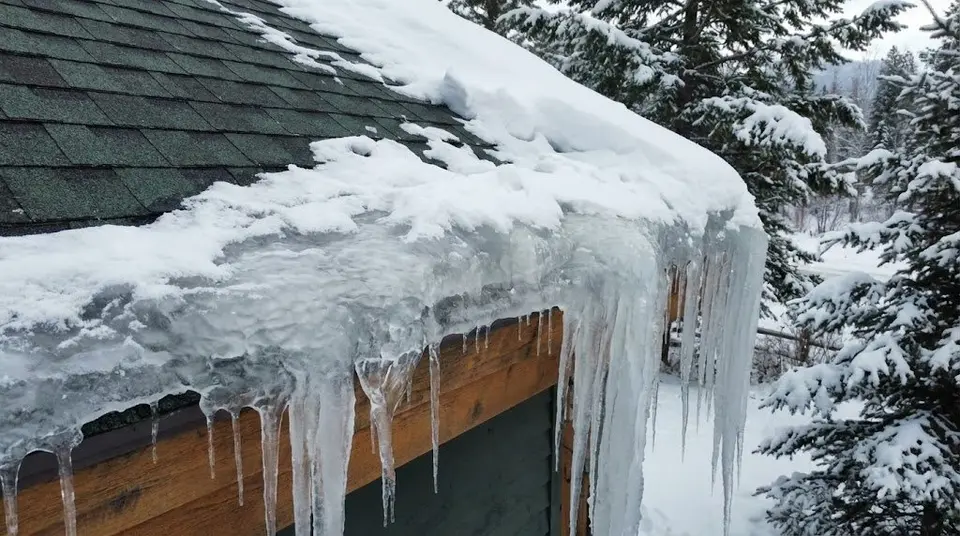
The short answer: Get your roof inspected and your gutters and valleys cleaned before the snow arrives, ideally in October, because Kalispell’s first lasting snow often lands in November. Real ice dam prevention happens in the attic, through insulation and ventilation, and at the eaves, through ice barrier membrane, long before the first flake falls. Everything you do after the snowpack forms is damage control.
Winter is the season your roof earns its keep. Kalispell averages roughly 56 inches of snow a year, about double the national average, and the valley’s habit of bouncing above and below freezing all winter turns that snow into meltwater and ice over and over. Here’s what actually matters in the fall, in the order we’d do it on our own houses.
How do I get my roof ready for winter?
Four things, in order: fix known damage while shingles are still warm enough to work with, clean the gutters and valleys after the larches drop, confirm your attic insulation and ventilation are doing their jobs, and get an inspection on the calendar before snow buries the evidence. None of these are glamorous. All of them are cheaper in October than in January, when the same problems surface as ceiling stains and ice dams with a foot of snowpack on top of them.
Ice dams start in your attic, not on your roof
Most winter roof leaks in the valley trace back to ice dams, and most ice dam advice treats the symptom. The mechanism is simple. Heat escaping your living space warms the roof deck, the snowpack melts from the bottom, and the meltwater runs down the slope until it hits the eave, which hangs past the heated wall and stays frozen. The water refreezes there, builds a dam, and the pond behind it backs up under the shingles.
So the fix lives in two places:
In the attic. Insulation slows heat from reaching the deck, and ventilation flushes out the heat that gets through, keeping the whole roof surface cold and even. A cold roof doesn’t melt its snowpack, and snow that never melts never dams. When we inspect, we check insulation depth, look for bypasses like uninsulated attic hatches and bath fans venting into the attic, and confirm soffit and ridge vents are open and actually flowing. Blocked soffit vents, usually from insulation stuffed into the eave bays, are one of the most common problems we find in valley attics.
At the eaves. Building code, where it applies here, recognizes the ice dam problem directly. The residential code requires an ice barrier, a self-adhering polymer-modified membrane, running from the eave edge to at least 24 inches inside the exterior wall line in areas with a history of ice damming. That’s us. One Flathead wrinkle worth knowing: Kalispell and Whitefish run city building departments that enforce this, but unincorporated Flathead County has no county building department at all, because county voters chose not to establish one. Outside city limits, nobody checks whether your roofer installed ice barrier. Plenty of rural valley roofs went on without it, and those are the houses with icicle problems every February. We install ice barrier to code spec on every roof, permit or no permit.
If a dam has already formed and water is coming inside, that’s an emergency call, not a DIY project. Our ice dam removal crew steams dams off without chiseling up the shingles underneath. Never let anyone take a hatchet or an ice pick to your eaves.
Clean the gutters and valleys after the needles drop
The Flathead’s forests are heavy on larch, and larch does something most conifers don’t: it drops all its needles every fall. Those golden needles are beautiful on the mountainsides and terrible in your gutters, where they mat into a dense, water-holding felt. Pine needles and cottonwood leaves pile on top.
Clogged gutters matter more here than in mild climates. Water that can’t drain sits, freezes, and turns your gutter into an ice tray bolted to your fascia. That ice adds weight, wicks moisture into the fascia board, and gives ice dams a head start by damming the eave before the snow even contributes.
Valleys deserve the same attention. A roof valley concentrates the drainage of two slopes into one channel, and debris that collects there holds moisture against the shingles through every freeze-thaw cycle. Kalispell winters cross the freezing line constantly rather than locking into a deep freeze, so a wet valley freezes and thaws dozens of times a season. Clear valleys shed; packed valleys grind away at the shingle surface all winter.
Time the cleanout for late October or early November, after the larch drop finishes but before the snow sticks.
Get the inspection done before snow hides the roof
Snow is a blanket in the worst sense: once it’s down, nobody can see what’s under it until spring. A lifted shingle, a cracked pipe boot, a nail pop, or a bit of failed flashing that would be a quick roof repair in October becomes an all-winter leak path under the snowpack, and you’ll learn about it from a ceiling stain in January when repairs are slow, cold, and weather-limited.
Kalispell’s first measurable snow typically arrives in November, with the heaviest months being December and January at around 11 inches each on average. Working back from that, October is the sweet spot for a fall inspection: warm enough for sealants and shingle repairs to set properly, late enough to catch damage from summer storms, early enough to fix what we find.
Fall books up fast for every roofer in the valley for exactly this reason. If your roof is more than a decade old, took hail this summer, or had ice dams last winter, get on a schedule now rather than after the forecast turns.
What we look for on a fall inspection
Every Sisu inspection starts with a drone survey, the same one we include with every estimate. It gives us, and you, complete photo coverage of the roof without a ladder disturbing anything. From there we’re checking the usual suspects: flashing at chimneys and walls, pipe boots (the rubber ones crack years before the roof wears out), fastener backout, granule loss, valley condition, and the eave edges where ice works hardest. Inside, if you’ll let us into the attic, we check insulation, ventilation flow, and any staining on the underside of the deck that says water already found a way in.
Homes up in Whitefish sit closer to the mountain snow and generally carry deeper snowpack for longer, which makes the attic side of this checklist even more important. Down in Kalispell, the freeze-thaw cycling is the bigger enemy. Same inspection, different emphasis.
Frequently asked questions
Should I rake the snow off my roof?
Usually only the first few feet above the eaves, and only with a proper roof rake from the ground. Removing snow at the eaves reduces the raw material for ice dams. Full-roof raking risks shingle damage and personal injury, and a code-built roof in Kalispell is designed for the load. If snow depth genuinely worries you, call us instead.
Do heat cables prevent ice dams?
Heat cables melt drainage channels through a dam so backed-up water can escape. They manage the symptom, and they help on chronically damming eaves, but they don’t fix the heat loss causing the melt. We treat them as a supplement to insulation, ventilation, and ice barrier, or a stopgap for roofs awaiting replacement. They also cost electricity all winter.
When is it too late in the year to fix a roof?
Never too late for repairs; leaks don’t respect the calendar, and we work all winter. But shingle sealants bond best in warmer weather, so fall repairs beat winter repairs when there’s a choice. Full replacements happen in winter too when needed, with extra weather precautions. October scheduling gets you the best conditions.
How often should gutters be cleaned in the Flathead Valley?
At least once a year, after the larch and cottonwood drop in late October, and twice if your house sits under heavy tree cover. Add a spring check after the melt, since winter tends to deposit granules, twigs, and the occasional shingle tab where you can’t see them from the ground.
Want your roof checked before the snow flies? Contact us and we’ll put you on the fall schedule, drone survey included.