Ice Dam Removal in Kalispell
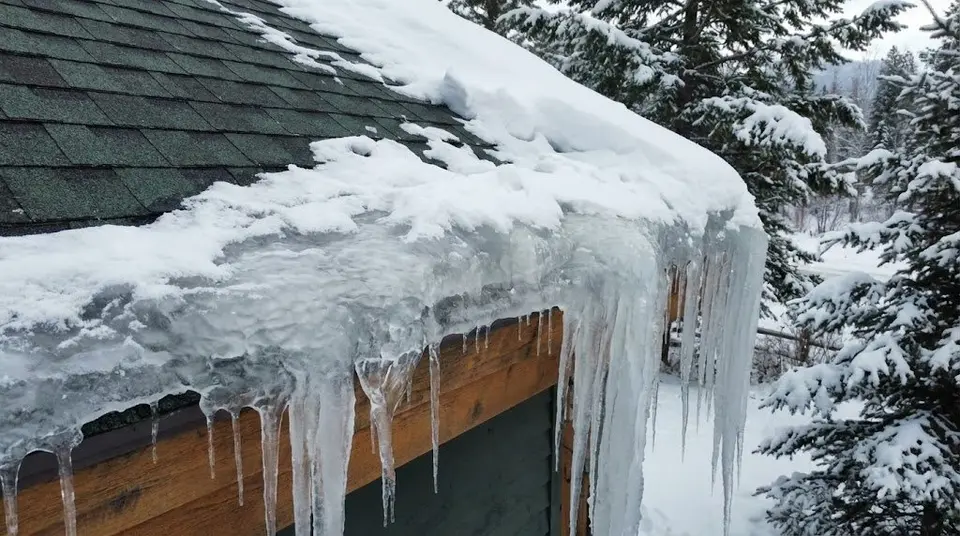
Ice dam removal in Kalispell only helps if someone also asks why the dam formed. Ice dams are not a snow problem. They are a heat problem. Warm air leaking into the attic melts the underside of the snowpack, the water runs down to the cold eaves, and it refreezes into a ridge that backs water up under the shingles. We remove the ice safely, then use the drone survey and an attic inspection to find the heat loss, because a roof that builds the same dam every February is telling you something.
Where ice dams come from
Every ice dam starts with heat escaping the living space. Attic bypasses around can lights, bath fans, chimneys, and attic hatches leak warm air; thin insulation lets heat conduct straight through; blocked soffit vents keep the attic from flushing that heat out. The roof deck warms above freezing while the eaves, which overhang unheated air, stay cold. Snowmelt refreezes at that line and the dam grows with every cold snap. Meltwater pools behind it, works under the shingles, and shows up as stained ceilings and wet exterior walls, often weeks before you connect it to the ice.
- Air leaks into the attic around lights, fans, hatches, and chimneys
- Insufficient or compressed attic insulation
- Blocked or undersized soffit and ridge ventilation
- Bath and kitchen fans venting into the attic instead of outside
- Complex rooflines with valleys and dormers that trap snow
Removal without wrecking the roof
How the ice comes off matters as much as whether it does. Hacking at a dam with a hatchet or an aggressive shovel takes shingles with it, and granules scraped off in February become leaks in June. We remove ice with methods that spare the roof surface, relieve the water trapped behind the dam so it stops feeding your ceiling stains, and clear the snow load above the dam so it cannot rebuild overnight. Roof raking the bottom few feet after storms can reduce the fuel available to a dam, but raking is management, not repair, and we will not pretend otherwise.
The permanent fix
After removal, we diagnose. The drone survey shows the melt pattern on the roof, which maps the heat loss below it, and an attic look confirms the cause: bypasses to seal, insulation to add, ventilation to open up. On roofs due for replacement, the fix goes further. Montana code calls for an ice and water barrier at the eaves, and older roofs often have too little or none. When we replace a roof, we run self-adhering ice barrier well past the interior wall line, so that even if a dam ever forms again, the water backing up behind it has nowhere to go.
What ice dam removal costs depend on
Removal is priced by the job in front of us, and the follow-up work is scoped separately once we know the cause. These are the variables that matter.
- Size and thickness of the dam and how much roof edge it covers
- Snow load above the dam that has to come off with it
- Roof height, pitch, and how safely the eaves can be reached
- Whether water has already entered and how far it traveled
- Scope of the root-cause fix: air sealing, insulation, ventilation
- Whether ice and water barrier work waits for a planned replacement or justifies one
When removal alone won't fix it
- The same eave dams up every winter. That is a heat-loss signature, and removing this year's ice buys you one season, not a solution.
- Water is already inside. Removal stops the feeding, but the wet insulation and staining need their own attention, and waiting invites mold.
- The attic has never been air sealed. Recessed lights, bath fans, and open chases will rebuild the dam with the next snowfall no matter how clean the removal.
- The roof is near end of life with no ice barrier at the eaves. Spending on repeated removals delays a replacement that would solve the backup permanently.
Ice removed with the roof surface intact, not chiseled apart
Drone survey maps the melt pattern to find the actual heat loss
Attic-level diagnosis: air sealing, insulation, and ventilation
Ice and water barrier done right when the roof is replaced
Straight answer when removal alone will not solve your problem
Local Kila crew, licensed Montana contractor, MT License 400855IC
How it goes
- 01
Drone survey and photo documentation
We photograph the dam, the melt pattern, and any interior-facing damage from above, before touching the ice. You keep the photos.
- 02
Safe removal
We take the dam and the snow feeding it off the roof with methods that protect shingles, then relieve the trapped water.
- 03
Root-cause diagnosis
We inspect the attic for air leaks, insulation gaps, and ventilation problems, and match the findings to the melt pattern.
- 04
The lasting fix
We scope the corrections, from air sealing and ventilation to ice barrier installed at replacement, so the dam does not return next winter.